Easy Flower Drawing Techniques and Coloring Tips
20 de outubro de 2026
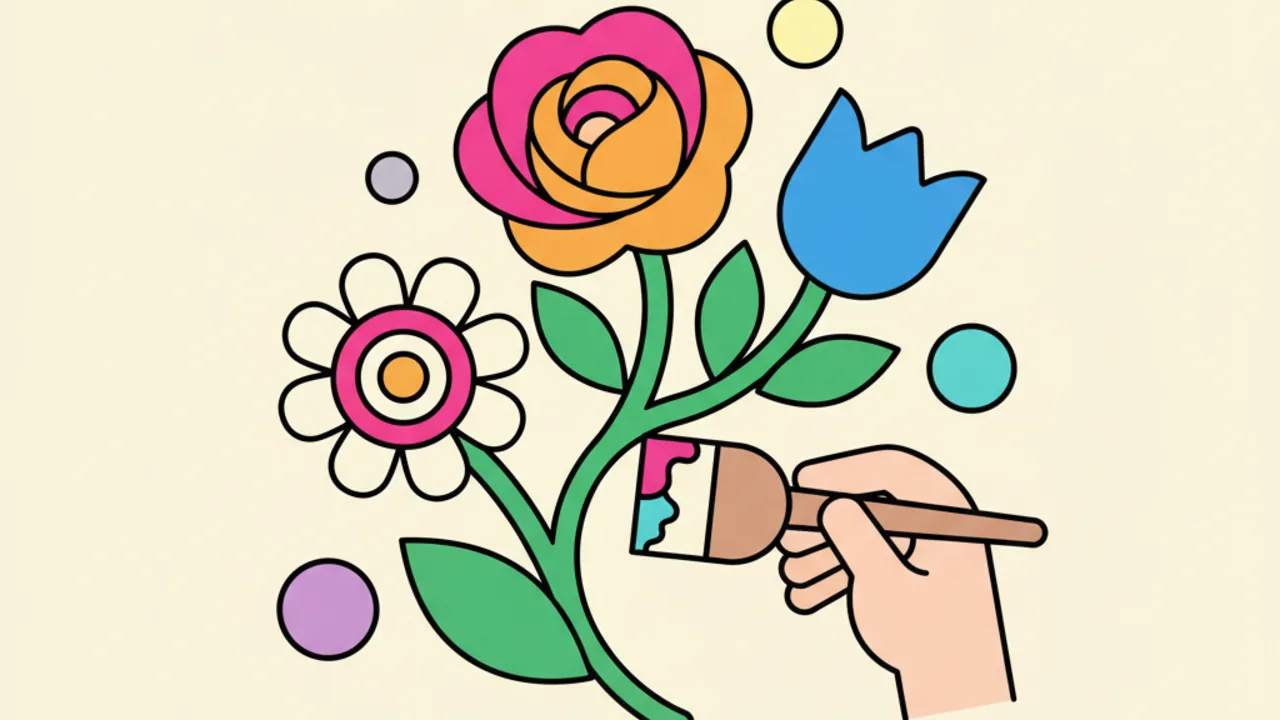
Learn how to draw flowers with simple techniques for beginners. Access our free printable coloring pages here at Drawing & Coloring.
Learning how to draw flowers is one of the most rewarding activities for anyone starting their art journey. Flowers have basic geometric shapes that make learning easy, allowing both kids and adults to develop motor skills while creating beautiful art. At Desenhando e Colorindo, we believe everyone can master kids' line art and botanical illustration techniques with a few simple steps and plenty of practice using our free printable coloring pages.
Understanding the basic structure of a flower drawing
Before grabbing your colored pencils, it's essential to understand a plant's simplified anatomy. Most flowers found in our coloring pages follow a circular pattern. To start your flower drawing, imagine a center point (the heart) and petals radiating from it.
Many people make the mistake of trying to draw each petal individually without a guide. The golden tip is to draw a light circle with graphite to mark how far the petals should reach. This ensures your final coloring activity has symmetry and visual balance, looking like professional work from a digital coloring book.
Right now, spring flowers are trending, and using this opportunity to practice educational drawings helps kids connect with nature. Use shapes like ovals, circles, and rounded triangles to define your flower's style, whether it's a simple daisy or an elegant tulip.
Step-by-step: How to draw flowers with geometric shapes
Mastering how to draw flowers requires breaking down a complex object into smaller parts. Follow this guide to create your own high-quality line art:
- The Center: Start with a small circle in the middle of the paper. This serves as the anchor for the entire drawing.
- Guide Petals: Draw four main petals at the 12, 3, 6, and 9 o'clock positions. This helps maintain correct spacing.
- Filling In: Add the intermediate petals between the guides, keeping them the same size.
- The Stem and Leaves: Trace two slightly curved parallel lines for the stem and add teardrop shapes for the leaves.
After finishing the sketch, you'll have a perfect base for the free printable coloring drawings we create here on the site. Remember to use light strokes so you can erase the construction lines once the art is finished.
Pro tip: When coloring your flowers, use a gradient technique starting from the center out to the edges. This adds depth and makes your cute drawings pop off the page!
Different types of flowers to practice
There are several styles you can explore when looking for printable art. Daisies are the easiest for beginners due to their repetitive petals. Roses, however, require a bit more technique, working with overlapping spirals that create the illusion of layers.
Tulips are great for those who enjoy online coloring or paper art, as they have large, closed shapes ideal for practicing uniform color filling. Try varying the petal tips: some can be pointy, others rounded, or even jagged.
Painting techniques for your flower drawings
Once you've learned how to draw flowers, the next step is painting. Using colored pencils, crayons, or even watercolors can turn a simple free drawing into a masterpiece. The key to a good painting is layering.
Start with a light base color across the whole petal. Then, use a darker shade of the same color near the center to create shadow. This is what we call volume. In coloring activities for younger children, we encourage the use of vibrant and contrasting colors to stimulate visual perception and creativity.
If you're using our AI-generated drawings or ready-made templates, try mixing materials. Painting the background with crayons and the flowers with markers highlights the main elements, creating an interesting contrast that enhances the kids' line art.
Recommended materials for drawing and coloring
To get the best results from your printable coloring sheets, your choice of materials matters. You don't need to spend much, but some basic items help with precision:
- 90g paper or higher: Prevents marker ink from bleeding through.
- HB and 2B pencils: HB for light sketches and 2B for finishing the line art outlines.
- Soft eraser: Essential to avoid smudging the paper during the educational drawing process.
- Quality sharpener: Keeping a fine point allows for better detailing in leaf veins and complex centers.
Having these items handy makes following how to draw flower tutorials much easier. If you prefer convenience, you can use our online coloring tool, which requires no physical materials and lets you test infinite color combos before printing.
Exploring textures in petals
An advanced but simple-to-apply technique is adding thin lines inside the petals. These lines follow the flower's curve and provide a realistic texture. In high-quality coloring pages, these details are often pre-printed, but you can add them manually to your free drawings to make them unique.
Benefits of flower coloring activities
Coloring flowers isn't just a hobby; it's a powerful pedagogical tool. For kids, it helps in identifying plant species and colors. For adults, it works as active meditation, reducing daily stress. By seeking free printable coloring pages at Desenhando e Colorindo, you're investing in a moment of relaxation and focus.
Kids' line art with nature themes encourages respect for the environment. When a child learns how to draw a flower, they start observing gardens and parks more closely, developing a keener eye for the details of the world around them.
Using flower drawings for school decoration
Teachers can use our educational drawings to decorate classrooms or create themed murals. A flower mural can represent growth and student vitality. Simply select several printable coloring pages, have the class paint them using different techniques, and assemble a large collective garden on the wall.
This activity promotes collaboration and lets each student show their identity through their chosen colors. The printable art on our site is optimized to use less black ink, ensuring savings for the school and clear outlines for the kids.
Customizing your drawings with extra elements
Don't stop at the flower! To make your flower drawing more interesting, add insects like butterflies, ladybugs, or bees. These elements complement the scene and offer more areas to practice painting. You can find many of these add-ons in our cute drawings section to compose a full landscape.
Frequently Asked Questions
What is the best flower for drawing beginners?
The daisy is highly recommended. Its structure of a central circle with simple oval petals allows you to focus on symmetry without the complexity of internal shadows other flowers require.
How do I make the flower outline look perfect?
Use a fine-tip black marker after you finish painting. This hides small pencil imperfections and makes the line art stand out, looking like a professional digital coloring book.
Can I print the drawings on any printer?
Yes, our free printable coloring pages are formatted in high resolution (A4) to work perfectly on any home or professional printer, ensuring crisp lines.
What colors should I use to make flowers look real?
Try using analogous colors (those next to each other on the color wheel). For example, if the flower is red, use orange for highlights and burgundy for shadows. This creates an amazing 3D effect.
Conclusion
Now that you know the best techniques for how to draw flowers, it's time to get hands-on and let your imagination run wild. Take advantage of the huge variety of templates we offer here at Desenhando e Colorindo to practice your skills. Don't wait—pick your favorite printable coloring pages now, get your pencils ready, and start creating your own colorful garden today!
Escrito e revisado por Armando Amaro
Fundador do Desenhando e Colorindo. Todo artigo passa por curadoria e revisão humana antes de ser publicado.