Step-by-Step: How to Draw Beach Scenes for Coloring
20 de outubro de 2026
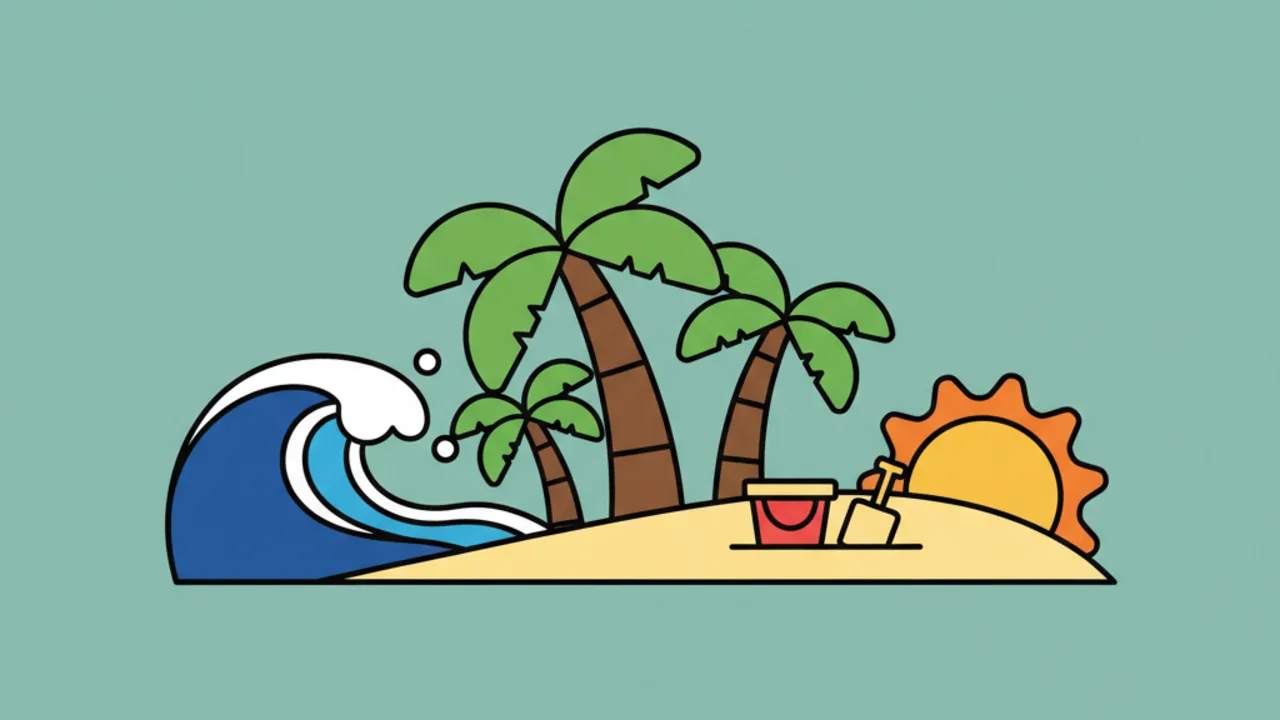
Learn how to draw amazing beach landscapes for coloring. Check out practical tips to create waves, palm trees, and sand for your free coloring pages. 🏖️
Creating your own free coloring pages is a wonderful way to spark creativity, especially with a beach theme. In this detailed guide, we’ll explore how you can build relaxing and fun compositions, turning a blank sheet into a true tropical paradise ready for vibrant colors.
The basic structure of a coastal landscape for coloring
To start creating your beach-themed coloring pages, the first step is to define the horizon line. In educational drawings for kids, simplicity is key. The horizon line separates the sky from the sea and should be sketched lightly with a pencil before finalizing the preschool line art stroke.
Dividing the page into three horizontal sections is a classic artistic composition technique. The bottom part will be the sand, the middle will be the sea, and the top the sky. This basic structure helps organize the elements and ensures that your digital coloring book or printable has visual balance and adequate spaces for color filling.
Defining the tide line
The tide line is where the water meets the sand. Instead of a straight line, try making soft, irregular curves. This creates the illusion of moving waves and makes your free printable coloring drawing much more dynamic and interesting for whoever is coloring it.
How to draw palm trees and tropical vegetation
No cartoon beach is complete without a beautiful palm tree. To make a cute drawing of a tropical tree, start with the trunk. The secret is to make a slightly tilted and segmented trunk, which makes shading or filling with textures easier during coloring activities.
The palm leaves should branch out from a central point at the top of the trunk. Imagine you are drawing large feathers or arches. Use quick, fluid strokes so the leaves look light in the wind. Remember to leave spaces between the leaves so the child can use different shades of green.
Pro tip: When creating free drawings of trees, avoid excessive detail at the top. Keep the outlines sharp so that markers or colored pencils don’t bleed outside the main line.
Creating waves and water texture
Representing water in coloring pages requires a balance between empty space and detail. You don't need to draw every drop, but rather suggest movement through curved lines. Small semicircles or elongated "c" shapes scattered across the sea area help indicate the rippling of the water.
Near the sand, add small bubbles or low clouds to represent sea foam. This is a favorite element in educational drawings, as it allows the person coloring to decide whether to leave the foam white or use light blue and gray tones.
Floating elements to bring the sea to life
- Sailboats: Simple triangles can turn into little boats on the horizon.
- Buoys and surfboards: Add oval shapes in the water to represent surfers or swimmers.
- Marine animals: A small triangle sticking out of the water could be a playful dolphin's fin.
Sand details: castles, shells, and fun
The sand is where the magic of printable art happens. This is where you insert the details that tell a story. A sandcastle is an iconic element. You can draw it using basic geometric shapes: squares for the base and triangles for the towers.
Scattering small shells and starfish along the shore adds charm to your coloring sheet. Try to keep these elements in varying sizes to create depth. Drawing a beach umbrella and a towel also helps set the scene, offering large areas for colorful patterns and stripes.
The sky and the radiant sun on the horizon
The sky takes up a significant portion of your line art. A large sun with well-defined rays is a classic that appeals to all ages. You can opt for a sun with a face for a more kid-friendly style or just a circle with rays for something more realistic. Fluffy, rounded clouds help fill the empty space and offer an interesting contrast to the blue of the sky.
If your goal is to create a sunset, add horizontal lines coming out of the sun towards the sea. This will guide the color choice of whoever is doing the coloring activity, encouraging the use of oranges, pinks, and purples typical of a beach evening.
Finishing tips for high-quality line art
For your free printable coloring pages to look professional, line weight is essential. Use thicker lines for the main outlines (like the palm tree or umbrella) and thinner lines for internal details (like leaf veins or sand grains).
Keep the spaces closed. In online coloring, the paint bucket tool depends on fully closed shapes. Even for physical printing, well-connected lines prevent visual confusion and help the child understand where each color begins and ends.
Checklist for a perfect beach scene
- Balance: Don't put all the elements on one side of the page.
- Spacing: Leave wide areas so that solid colors can be applied easily.
- Variety: Mix nature elements (water, sun, plants) with human objects (chairs, buckets, toys).
- Clarity: Make sure the strokes are dark enough for the printer to pick up.
The importance of educational drawings in development
Producing and using educational drawings of natural settings, like the beach, helps with spatial perception and the recognition of ecosystems. Teachers and parents can use these themes to talk about environmental preservation while the little ones have fun with their pencils. The act of coloring inside the lines improves fine motor skills, preparing kids for writing and other manual tasks.
Furthermore, using AI drawings or manually created ones allows for infinite customization. You can create a beach scene that reminds you of a family vacation or an imaginary place, making the coloring for kids experience much more affective and memorable.
Frequently Asked Questions
How do I make a sand effect on paper?
To give sand texture to your coloring pages, you can draw small scattered dots at the base of the drawing. Another technique is to draw small commas to simulate tiny dunes or the relief left by the wind.
What is the best paper for printing my drawings?
For printable drawings, it's ideal to use standard 20lb or 24lb (75g to 90g) printer paper. If you plan to use gouache or watercolor, look for heavier paper like 65lb or 110lb cardstock to prevent the sheet from warping with moisture.
Can I add known characters to my beach?
Yes! You can integrate your favorite cartoon characters into the beach setting. Just remember to keep the proportions correct so the character doesn't look bigger than the palm tree—unless they're a giant!
How do I color the sea without making it all blue?
The tip for your coloring activities is to use variations of blue, aqua, and even turquoise tones. Near the sand, the water is usually lighter, and the further from the shore, the darker it becomes. Use the white of the paper for the foam of the waves.
Conclusion
Creating and coloring beach scenes is one of the most relaxing and productive activities for all ages. By following these simple steps, you can transform a plain sheet into a scene full of life and sun. Now that you know all the tips for creating and detailing your tropical scene, how about putting them into practice? Visit our gallery, choose your favorite templates, and start drawing and coloring right now with Desenhando e Colorindo!
Escrito e revisado por Armando Amaro
Fundador do Desenhando e Colorindo. Todo artigo passa por curadoria e revisão humana antes de ser publicado.