How to Create 3D Coloring Pages: An Easy Step-by-Step Guide
31 de agosto de 2026
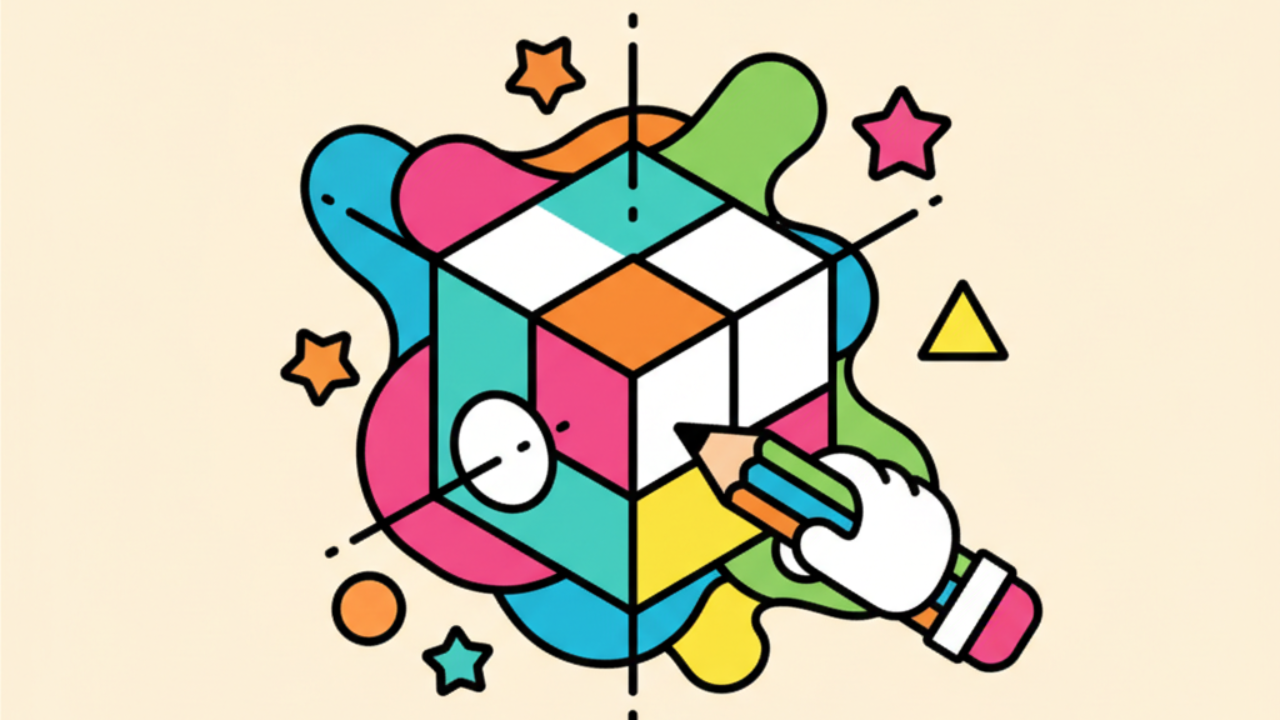
Learn how to create 3D drawings for coloring and printing for free. Transform your line art with simple depth techniques for kids and beginners! 🎨✨
Creating free printable coloring pages with a 3D effect is one of the most exciting ways to elevate your art activities. In August, with children fully immersed in their school routines, mastering depth techniques on paper can be an incredible differentiator for educational projects and family fun time. The secret to three-dimensionality in kids' line art isn't in complexity, but rather in how lines guide the observer's eyes.
To begin your journey with 3D coloring activities, you don't need expensive materials. Just paper, pencils, an eraser, and the desire to transform a flat sheet into something that seems to leap off the surface. This detailed guide will teach you how to apply concepts of perspective and shading to your educational drawings, ensuring your printable art looks professional and dynamic.
The Foundation of Perspective in Coloring Pages
Perspective is the backbone of any 3D drawing. When we look for coloring pages that have volume, we are actually dealing with the optical illusion created by the vanishing point. Imagine a road that narrows into a dot on the horizon; this is the most basic concept you can apply to your coloring sheets.
For beginners and children, using a vanishing point helps define where all depth lines should converge. When creating cute drawings of buildings or gift boxes, lightly sketching these guide lines allows the structure to appear solid. This transforms a simple square into a cube, giving the young artist a perfect base to practice painting with light and shadow.
When preparing your digital coloring book or physical one, consider including basic geometric shapes before moving on to complex characters. Consistent practice with cubes, spheres, and cylinders is what separates a flat drawing from an impactful three-dimensional artwork. Remember that the goal is to make coloring for kids an experience of spatial visual learning.
Shading Techniques to Create Volume
After defining the lines of your line art, the next essential step is shading. It's shading that tells the brain where the light is hitting and where the object ends. In free printable coloring pages, you can leave areas indicated with light hatching or just thicker outlines to help the child identify shaded areas.
There are three main types of shadows you should consider when creating your coloring activities:
- Form Shadow: This is the dark part of the object itself that is not receiving direct light.
- Cast Shadow: This is the shadow the object casts onto the surface it rests upon.
- Mid-tone: The smooth transition between the lightest and darkest areas of the drawing.
By encouraging the use of colored pencils to create these effects, Desenhando e Colorindo recommends starting with light colors and layering them. This prevents the paper from becoming saturated too quickly and allows for corrections. 3D comes to life when the contrast between maximum brightness and deep shadow is well executed in your coloring pages.
Pro Tip: When printing your drawings, prefer paper with a weight above 120gsm if you plan to use watercolor pencil or marker shading techniques, ensuring the 3D effect doesn't bleed through to the back of the sheet.
The Use of Dynamic Contour Lines
In the world of kids' line art, line thickness says a lot about depth. Thicker lines tend to bring the object "forward," while thin, delicate lines give the impression that the object is more distant. When creating AI generated drawings or doing it manually, adjusting the line weight is an infallible trick.
To make a drawing look like it's popping off the page, try thickening the contours of the bottom part and the sides opposite the imaginary light source. This creates visual weight that grounds the drawing. In educational drawings, teaching children to differentiate between external and internal contours greatly helps in perceiving complex shapes.
Furthermore, using overlapping lines suggests that one object is in front of another. If you're drawing a forest for online coloring or on paper, place the front trees with sharp details and strong strokes, while those in the background remain as light silhouettes. This creates a natural depth of field in your printable art.
Creating Simple Optical Illusions for Kids
A very fun technique for 3D coloring pages is the distorted parallel lines technique. You draw the silhouette of a hand, for example, and fill the rest of the sheet with straight horizontal lines. Where the lines pass through the hand, you draw them curved, as if they were contouring a real object. The visual result is impressive and very easy to do.
This type of coloring activity stimulates fine motor skills and geometric understanding. It's a form of educational drawings that entertains for hours. At Desenhando e Colorindo, we are always looking for ways to combine the fun of coloring with art concepts that can be applied in school during this month of August.
Recommended Materials for 3D Effects
To get the best results in your free printable coloring pages, material choice makes a difference. Although the common colored pencil is a favorite, there are other options that can enhance volume:
- 2B and 4B Pencils: Excellent for creating deep shadows and striking contours.
- Blending Stump: A rolled paper tool that helps soften shadow transitions, ideal for realistic line art.
- White Gel Pen: Perfect for adding highlights (shine) to the eyes of cute drawings or on metallic surfaces.
- Canson Paper: The texture helps hold pigment, facilitating the creation of gradients necessary for the 3D effect.
How Technology and AI Help in 3D Design
Currently, the use of AI generated drawings has opened doors for anyone to create complex 3D bases for coloring. Digital tools can generate coloring pages with perfect perspectives, serving as a guide for those who want to practice manual coloring. At Desenhando e Colorindo, we integrate the best of technology to offer superior quality free printables.
These AI-generated models usually have predefined lighting, which makes it much easier for beginners to learn where to place shadows. You can use a digital coloring book to test color schemes before moving to physical paper. The convergence between digital and analog makes the act of coloring for kids much richer and more informative.
Step-by-Step: Drawing a 3D Hole on Paper
One of the most famous coloring pages is the "infinite hole." To make it, draw a square and, inside it, lines that converge to a slightly displaced center. By coloring the sides with a gradient from dark gray to white, you create the illusion that there is a real hole in the paper sheet.
This is one of the printable art pieces that is most successful among students in classrooms. It's a practical lesson in geometry and art. The secret here is the precision of the lines. Use a ruler to ensure the vanishing lines are straight, maintaining the integrity of the optical illusion. Then, just unleash your creativity with the surrounding colors to highlight the effect.
Tips for Quality Printing and Coloring
When choosing your free printable coloring pages, make sure the image resolution is high. Pixelated images lose the definition of 3D strokes, ruining the final effect. On our portal, all files are optimized to ensure your kids' line art comes out sharp on a home printer.
Another important point is printer settings. Use the "High Quality" mode and check that the black ink cartridge has enough ink, as contrast is vital for depth. If you are using online coloring, take advantage of the digital gradient tools that many platforms offer to simulate volume even before touching paper.
Frequently Asked Questions
How do you make a 3D drawing look like it's coming off the paper?
The main trick is to use the anamorphic technique, where you draw the object elongated at a specific angle and then cut out the excess paper around the top of the drawing, creating the illusion that it's standing up.
What's the best pencil for shading coloring pages?
For coloring activities that require soft shadows, B series pencils (like 2B, 4B, or 6B) are the most suitable because they are softer and easier to blend, providing a more natural gradient.
Can young children learn 3D techniques?
Yes, as long as it's taught in a playful way. Starting with the 3D hand technique using curved lines is an excellent introduction to educational drawings and helps develop visual perception from an early age.
Where can I find ready-made 3D drawing templates for printing?
You can find a vast collection on the Desenhando e Colorindo website. We have sections dedicated to free printable coloring pages that already include shading guides to facilitate learning the three-dimensional effect.
Now that you know the main techniques to transform your coloring pages into true three-dimensional works of art, it's time to get hands-on! Explore our gallery, choose your favorite printable art, and start practicing today. Remember that practice makes perfect, and every new page is an opportunity to explore your creativity and master the world of colors and shapes at Desenhando e Colorindo!
Escrito e revisado por Armando Amaro
Fundador do Desenhando e Colorindo. Todo artigo passa por curadoria e revisão humana antes de ser publicado.