How to Draw a Garden: Step-by-Step Coloring Guide
26 de outubro de 2026
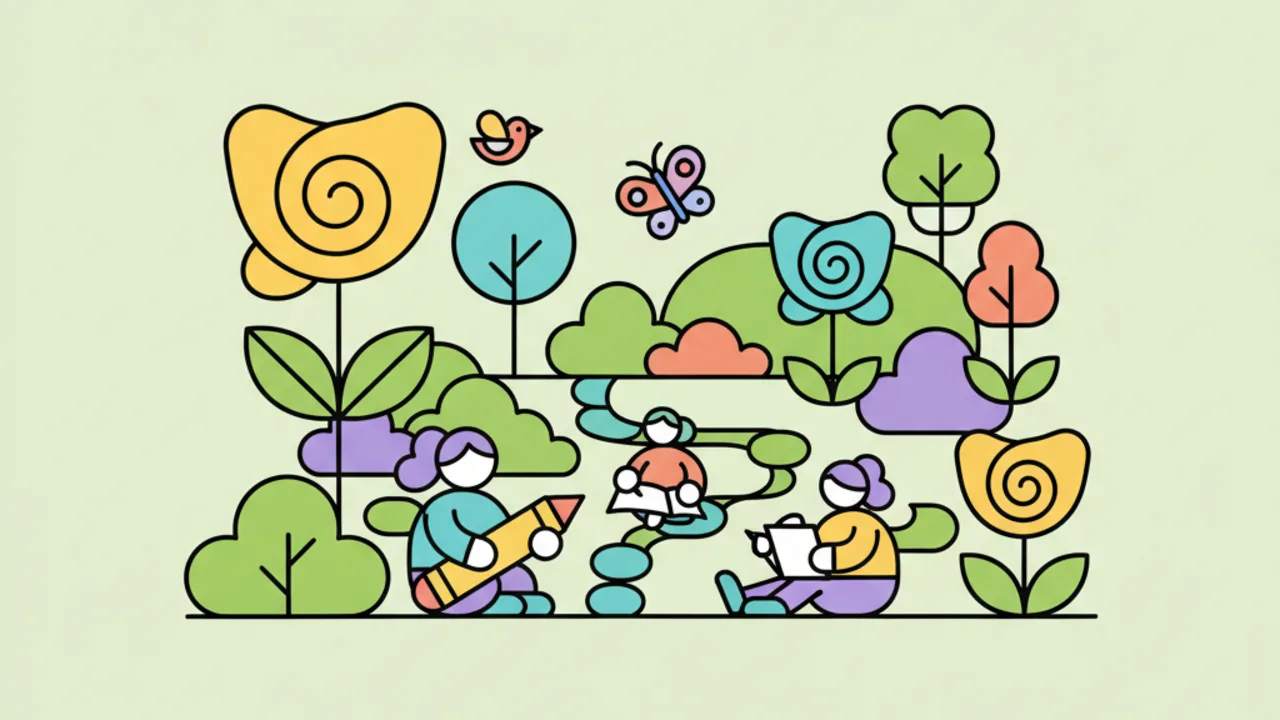
Learn how to draw a garden with this easy guide! Find tips and free printable coloring pages at Draw and Color. Have fun creating your masterpiece! 🌸
Foundations for Creating Your First Paper Garden
Learning how to draw a garden is one of the most relaxing and creative activities out there. To start, you need to visualize the space you want to create on paper. Imagine a vibrant scene, filled with coloring pages waiting for your personal touch. The secret to a great garden drawing lies in layering elements, creating depth and life in your artistic composition.
Before you pick up your pencil, think about the basic structure. A garden isn't just a pile of plants; it's an ecosystem. When planning your free printable coloring pages, decide if your garden will be a classic English style with wildflowers or a minimalist Japanese garden with stones and bonsai trees. This decision will make the initial sketching process much easier.
At Desenhando e Colorindo, we encourage constant practice. Start by drawing simple geometric shapes to represent bushes and tree canopies. Circles, ovals, and triangles serve as the invisible structure supporting the beauty of your line art for kids or adults. From these shapes, you can add details like petals and textured leaves.
Essential Elements of a Coloring Garden
For your drawing to be interesting, it needs variety. Mixing different types of vegetation is what makes printable coloring pages so attractive to both children and adults. Think in layers: the ground, medium-height plants, and tall elements that touch the sky.
The must-have elements in your how to draw a garden guide include:
- Stone Paths: These create a focal line that guides the viewer through the drawing.
- Fence or Wall: Acts as a charming boundary that gives a cozy feel to the scenery.
- Flowers of Different Sizes: Tall sunflowers contrasting with small daisies on the ground.
- Water Features: A small pond or fountain adds interesting reflections to color later.
- Little Inhabitants: Butterflies, bees, and birds that give movement to the static scene.
When creating these coloring activities, remember to leave strategic white spaces. This allows the painting to flow better, whether with colored pencils, crayons, or even the online coloring experience many users prefer today.
Drawing Flowers Step-by-Step
Flowers are the heart of any garden. To draw a simple flower, start with a small central circle. Around it, draw teardrop-shaped petals. To make the drawing more realistic, don't make all the petals identical; slightly vary the size and tilt of each one.
If you are creating cute drawings, you can add smiley faces to the center of the flowers. This turns a drawing lesson into playful fun for younger kids. Explore different species, like tulips (which look like cups) or roses (which resemble spirals wrapped in layers of petals).
Pro tip: When drawing stems, avoid perfectly straight lines. In nature, stems have gentle curves and tilts that indicate the weight of the flower or the wind direction, making your digital coloring book much more dynamic.
Creating Depth and Perspective in Scenery
A common mistake when learning how to draw a garden is placing all elements on the same horizontal line. To prevent the drawing from looking "flat," use perspective techniques. Elements closer to the viewer should be drawn larger and with more detail, while the background should be smaller and more simplified.
You can use AI-generated drawings as a reference to understand how shadows and lights behave in an open environment. Try to represent this in your line art by creating light hatching in areas where the sun doesn't hit directly.
Adding a background element, like a birdhouse or a large tree, helps anchor the eye. These details ensure your educational drawings teach not only art but also nature observation and spatial composition—fundamental skills for young artists.
Painting Techniques for Printed Gardens
After finishing your drawing or downloading our printable coloring sheets, the painting phase is where the magic happens. For gardens, the layering technique is essential. Start with lighter shades of green for the grass and leaves, and gradually add darker tones to create volume.
Mixing primary colors to get different shades of green is an excellent pedagogical activity. Show how yellow and blue transform into olive, forest green, or lime green. This makes the experience with printable arts much richer and more instructional.
- Use gradients on flower petals to give them a three-dimensional look.
- Leave small white dots to simulate the sun's glitter hitting the leaves.
- Paint the sky with soft blue or sunset orange tones to set the garden's mood.
- Try using watercolors on printed paper (if the paper is heavier) for a fluid artistic effect.
Using Different Materials
Don't limit yourself to traditional colored pencils. Garden coloring pages look incredible when we mix textures. You can use markers to outline the most important details and crayons to fill large areas of grass or sky quickly and evenly.
For those who prefer technology, online coloring offers an infinite color palette that can be tested before moving to physical paper. The important thing is to keep the creativity flowing and use the garden as a laboratory of colors and shapes, always looking for new ways to express the beauty of nature.
How to Add Realistic Textures to Nature
Texture is what differentiates an amateur drawing from a professional one. When learning how to draw a garden, practice specific textures for each element. Tree bark should be rough, represented by short, irregular lines. In contrast, lily petals should have a smooth, satiny texture.
For grass, instead of painting a solid green block, make small vertical strokes in different directions. This creates the illusion of real blades of grass and gives much more life to your free drawings. Remember that patience is the artist's best tool when adding these minute details.
Details That Make a Difference
Small details like dew drops on leaves or a ladybug walking along a stem can completely transform the perception of your work. These elements add a narrative to the drawing. When someone looks at your coloring activities, they begin to imagine the story behind that bucolic scene.
At Desenhando e Colorindo, we believe every detail counts. If you are creating a garden for kids, exaggerate the sizes of fruits or flowers to make them easier to handle with a pencil. If it's for adults, focus on complex vein patterns in the leaves, turning the act of coloring into an active meditation.
Benefits of Coloring Nature Themes
Coloring gardens and nature elements brings numerous psychological benefits. Studies indicate that visual contact with organic shapes and a palette of green and floral colors helps reduce stress and anxiety. Our free printable coloring pages are designed to offer this creative sanctuary.
For children, it's an opportunity to learn about botany in a fun way. They can identify plant parts like roots, stems, and leaves while deciding what color the flower will be. It's the perfect union of education and entertainment—what we call high-quality educational drawings.
Additionally, the motor act of coloring within the lines improves fine motor coordination and concentration. By focusing on a detailed garden, the mind disconnects from external distractions and focuses on the present moment, making the digital coloring book or printed version a powerful well-being tool.
Tips for Printing Your Drawings with Quality
To ensure your how to draw a garden experience results in a beautiful piece of physical art, printing is key. Make sure your printer is set to maximum quality. If possible, use paper with a weight of 120g (32lb) or higher to prevent marker ink from bleeding through.
Printing Tip: Always preview the print before confirming. Check if the drawing is centered and if the margins aren't cutting off important flower details or the garden borders.
On the Desenhando e Colorindo website, all files are optimized for A4/Letter paper, ensuring you have the best possible experience when downloading your printable coloring pages. The clarity of the lines makes it easier for beginners and offers a pleasant challenge for colored pencil veterans.
Frequently Asked Questions
What is the best flower to start drawing in a garden?
The daisy is ideal for beginners. Its structure is simple, with a circular center and repetitive oval petals, which helps train stroke consistency before moving on to more complex flowers like roses or orchids.
How can I make my garden look fuller in the drawing?
The technique is to draw plants at different heights. Place low bushes in the front, medium flowers in the center, and trees or climbing plants in the back. Filling empty spaces with small leaves and grass also helps give the feeling of a lush garden.
Can I use watercolors on printed drawings from the site?
Yes, as long as you print on specific watercolor paper or high-weight offset paper (above 180g). Common printer paper may wrinkle or tear when it comes into contact with a lot of water.
Where can I find inspiration for garden colors?
Nature itself is the best source. Observe parks, squares, or even potted plants at home. Photos of botanical gardens also offer incredible color combinations that you can replicate in your coloring sheets.
We hope this how to draw a garden guide has inspired you to create amazing scenes. Remember, there's no right or wrong in art; the important thing is to express yourself and have fun with colors. Now that you know the techniques, how about getting to work? Explore our vast collection of free printable coloring pages here at Desenhando e Colorindo, pick your favorites, and start bringing your own private garden to life today!
Escrito e revisado por Armando Amaro
Fundador do Desenhando e Colorindo. Todo artigo passa por curadoria e revisão humana antes de ser publicado.