How to Draw Easy Mountains for Coloring
09 de novembro de 2026
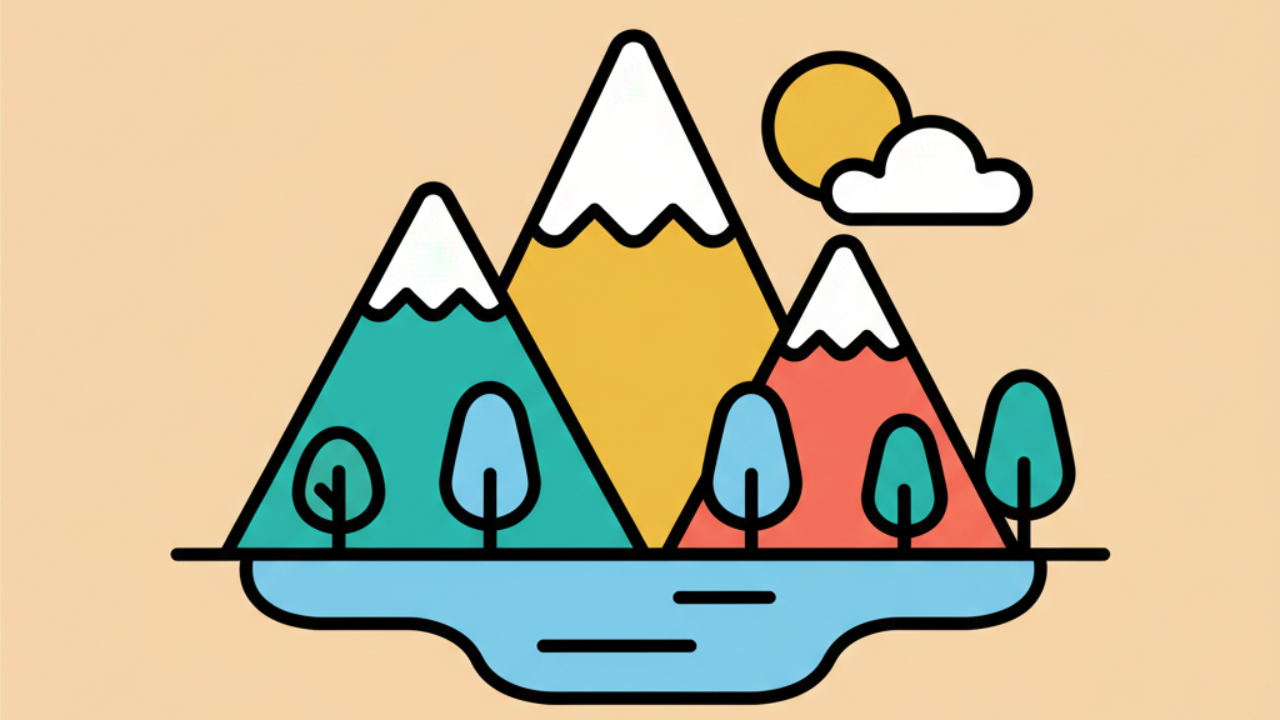
Learn how to draw easy and realistic mountains to create your own coloring pages. Simple line art tips for kids and art beginners! 🏔️🎨
Drawing natural landscapes is one of the most relaxing activities for art lovers. If you are looking to learn how to draw easy mountains, you've come to the right place. In this complete guide, we will explore simple line art techniques that allow you to create amazing scenery for your own custom coloring book, perfect for those cozy creative sessions at home or in the classroom.
The Basic Structure of Mountain Coloring Pages
To start creating your own printable coloring pages, you don't need fancy materials. The secret to a perfect mountain lies in simple geometry. Think of irregular triangles. Unlike a perfect pyramid, mountains in nature have varied peaks and asymmetrical slopes.
When starting your stroke, avoid perfectly straight lines. Use light, slightly shaky movements to simulate the texture of rocks. This gives a much more realistic look to your coloring page, giving children or adults interesting paths to follow with their colored pencils.
Choosing the Peak Shape
There are basically three types of peaks you can draw to add variety to your coloring activities. The first is the jagged peak, ideal for representing high, snowy summits. The second is the rounded peak, reminiscent of soft, ancient hills. The third is the plateau, with a flat top, creating a distinct geological look.
Recommended Materials for Kids' Line Art
While you can use any paper, to create high-quality printable art for Desenhando e Colorindo, we recommend using fineliners or black felt-tip markers. This ensures that when you scan or photocopy the drawing, the lines stay crisp for kids to stay within the lines.
- HB pencil for the initial sketch (easy to erase).
- Soft eraser that won't smudge the paper.
- Black marker or pen for the final outline.
- Common printer paper (A4) for quick tests.
Step-by-Step: How to Draw Easy Mountains
The first step is defining the horizon line. Draw a light horizontal line on the bottom third of the page. This will be the base where your mountains sit. From there, start tracing the main outline of the central mountain, which is usually the largest and most detailed in your digital coloring book.
After making the outer shape, add the ridge lines. These are lines that go down from the peak toward the base, creating the illusion of depth and different faces. This is where the drawing gains volume and stops being just a flat triangle.
Adding Depth Details
To make your coloring sheet look professional, overlap the mountains. Draw some smaller shapes in front of the larger ones. This creates the feeling of a mountain range, an essential technique for kids' line art that helps develop spatial perception in little artists.
Pro Tip: When creating the outlines, leave open spaces at the top of the mountains to represent snow caps. These white areas are great for kids to decide if they want to paint them light blue, gray, or just leave them white.
Shading Techniques for Coloring Pages
Even in educational drawings, line shading is a valuable technique. Since the goal is to color it later, don't fill in the shadows completely. Use hatching (small parallel strokes) on just one side of the mountain. This indicates where the light is coming from and helps children understand light and shadow concepts while having fun.
You can vary the line thickness. Use thicker lines for the mountain bases and thinner lines for the peaks and snow details. This variation makes the online coloring or paper experience much more dynamic and visually interesting.
How to Create Full Scenery Around Mountains
A mountain alone can look a bit lonely. To enrich your cute drawings of nature, add complementary elements. Pine trees in simple triangle shapes at the base of the mountains help give the drawing scale. Fluffy clouds floating behind the peaks are also excellent additions for those looking for free adventure-themed coloring pages.
If you want an extra touch of creativity, add a sun or a moon between the peaks. This defines whether the scene is day or night, directly influencing the choice of colors during painting. Remember that at Desenhando e Colorindo, creative freedom is what matters most!
Water Elements: Lakes and Rivers
Mountains are often the source of rivers. Draw a winding line that starts thin at a crevice and gets wider as it flows down to the base. This creates a majestic river, offering a new area of color (blue) to contrast with the earthy or gray tones of the rocks.
Educational Benefits of Coloring Landscapes
Using mountain coloring pages helps develop fine motor skills. The varied angles and rocky textures require different hand movements, which is excellent for school-aged children. Furthermore, the nature theme promotes calm and focus.
- Stimulates creativity and color choice.
- Develops the notion of perspective.
- Relaxation and stress reduction for adults.
- Recognition of basic geographical shapes.
Tips for Printing Your Drawings Perfectly
After finishing your line art, it's time to put it on paper. If you are using ready-made art from Desenhando e Colorindo, check if your printer settings are set to "Black and White" and "High Quality." This prevents lines from coming out faint or gray.
Use heavier paper (like 120g or 180g) if you or your students plan on using gouache or watercolors. For colored pencils and crayons, standard 75g printer paper works perfectly, ensuring hours of fun with our free drawings.
Integrating Technology: AI Drawings
Currently, the use of AI-generated drawings has helped many artists find references for poses and compositions. You can use AI tools to get ideas for different types of mountain ranges—like the Andes or the Alps—and then create your own hand-drawn interpretation, resulting in a unique and original piece of printable art.
Frequently Asked Questions
How do I make the mountaintop look snowy?
Draw an irregular zigzag line slightly below the mountain peak. The top part should remain without internal details, indicating it's covered by a smooth layer of snow, while the bottom part gets the rocky textures.
What is the best color for realistic mountains?
While gray or brown are the classics, mountains can have shades of blue, purple, and even orange during sunset. Encourage the use of layers of different colors to create a deeper and more realistic effect in your coloring sheets.
Can small children draw mountains?
Yes! For the little ones, focus on the "big triangles" concept. They can make simple geometric shapes, and you can help them with the final outline, turning the activity into a moment of interaction and artistic learning.
Can I use markers to color the mountains?
Yes, you can, but be careful with the paper weight so it doesn't bleed through. Markers are great for bold outlines, while colored pencils are better for creating smooth gradients for the shadows on the slopes.
We hope this guide on how to draw easy mountains has inspired you to grab your supplies and start creating. Explore the wide variety of themes at Desenhando e Colorindo, pick your favorites, warm up the printer, and start bringing your favorite landscapes to life right now. The art of coloring is for everyone, and every stroke is a step toward fun and relaxation! 🎨⛰️
Escrito e revisado por Armando Amaro
Fundador do Desenhando e Colorindo. Todo artigo passa por curadoria e revisão humana antes de ser publicado.