How to Draw Perfect Circles by Hand: Line Art Guide
27 de agosto de 2026
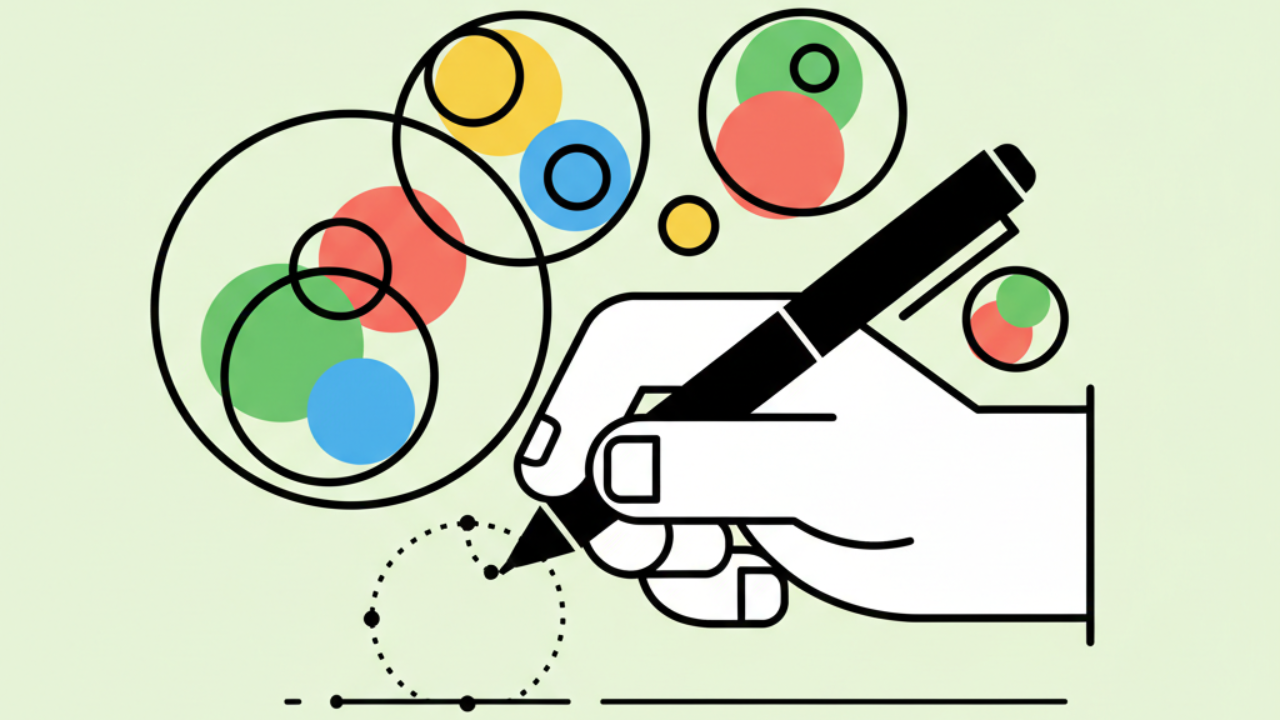
Master the art of drawing freehand circles to level up your line art. Practice with our expert tips and get your coloring pages ready to print and color! 🎨
The Importance of Circles in Line Art and Coloring Pages
Mastering basic geometric shapes is the first step for any artist who wants to create their own coloring pages. The circle is, without a doubt, the most challenging shape and, at the same time, the most ubiquitous in cute drawings and complex illustrations. Whether defining a character's face or the details of a landscape, a fluid stroke is essential.
Many Drawing and Coloring enthusiasts find it difficult to maintain symmetry without using digital tools or physical compasses. However, developing this skill manually drastically improves your motor coordination, directly reflecting on the quality of your kids' line art and professional work.
Pro tip: When practicing circles, don't focus on immediate perfection, but on the lightness of your wrist. The less pressure you apply to the paper, the easier it will be to correct the stroke's path before finalizing the outline for your free printables.
In this guide, we'll explore techniques that turn the fear of a blank page into confidence, allowing you to create custom coloring activities with much more ease and technical precision.
Warming Up Your Wrist for High-Quality Educational Drawings
Before putting pencil to paper, you need to understand that the movement of a perfect circle doesn't come from the fingers, but from the shoulder and elbow. If you draw only by moving your fingers, your range is limited, resulting in oval shapes or broken lines that ruin educational drawings.
The Ghost Stroke Warm-up
The "ghost stroke" technique consists of making the circular motion in the air, a few millimeters above the sheet, before actually touching the pencil tip. This creates temporary muscle memory. Repeat the circular motion several times and, when you feel the rhythm is steady, lower the pencil gently to mark the line art.
Practicing this warm-up daily is the secret of great digital coloring book illustrators. Whether you're dealing with stiff joints in the winter or just starting your day, do wide movements to loosen up your arm muscles before starting your printable art.
Manual Techniques to Replace a Compass
There are anatomical methods that allow your own body to function as a natural compass. These techniques are excellent for those who like to create printable coloring pages anywhere, without relying on full school kits.
- The Pinky Pivot: Rest your pinky finger joint firmly on the paper. Use it as the center point (the compass needle). Rotate the sheet of paper with your other hand while keeping the pencil still. The result is a perfectly concentric circle.
- The Cardinal Points Technique: Mark four points in a cross shape (north, south, east, west) at an equal distance from the center. Connect these points with smooth arcs. This technique is ideal for sketching faces for cute drawings.
- The Wrist Pivot: Keep your wrist fixed and rotate your hand laterally. This technique works best for small circles, ideal for eyes and button details in coloring activities.
By applying these methods, you'll notice your kids' line art will take on a much more professional look, making it easier to fill in when coloring online or using traditional colored pencils.
How Symmetry Improves the Coloring Experience for Kids
For the young audience at Drawing and Coloring, clarity of form is fundamental. A well-defined circle helps a child identify spatial boundaries, which is essential for cognitive development during coloring activities. When the outline is firm and continuous, the experience of using the paint bucket tool in online coloring tools becomes much more satisfying.
Building Characters with Geometric Shapes
Almost all popular characters start with a circle. If you learn to draw this shape freehand, you can create your own AI drawings and then refine them manually, blending technology and traditional art. Visual balance draws the eye and makes the digital coloring book more organized.
Remember that line art is the backbone of any illustration. If the circular base is solid, all additional elements like ears, eyes, and accessories will fit naturally, creating harmonious drawings to color.
Practical Exercises for Repetition and Flow
Repetition is the mother of retention. To master the art of creating coloring pages, we suggest a simple exercise routine that can be done on any scrap of paper before printing your official printable art.
The Light Layers Method
Instead of trying to draw the final line all at once, draw several very light circles, one over the other, until the correct shape appears among the lines. Then, use a marker or ink pen to define the main outline of your line art and erase the pencil sketches. This is the standard process for creating high-quality free printable coloring pages.
- Draw 20 small circles a day.
- Try drawing circles inside squares to train proportion.
- Practice drawing circles both clockwise and counter-clockwise to balance your tendons.
Over time, this practice will make the process of creating educational drawings intuitive and enjoyable, allowing you to focus on creativity rather than pure technique.
Common Mistakes When Drawing Freehand Circles
Many beginner artists make the mistake of "squashing" the circle, unintentionally turning it into an ellipse. This usually happens when the paper is at an awkward angle relative to the body. To avoid this when creating your kids' line art, make sure your eyes are directly above the paper.
Another frequent mistake is the "hairy line" or interrupted stroke. A circle drawn in several small segments creates a jagged edge that makes it hard for someone to use the coloring pages. Try to keep the movement continuous, even if it's not perfect at first. Fluidity is more important for line art than initial millimetric precision.
Integrating Circles into AI Drawing Projects
At Drawing and Coloring, we encourage the use of new technologies. When generating AI drawings, shapes can often come out slightly distorted. Knowing how to correct circles by hand allows you to take an AI-generated base and transform it into a perfect, professional coloring page.
You can print the technology-generated sketch and use wrist rotation techniques to redefine the outlines. This ensures your printable art has the human touch and the technical precision needed for an excellent digital coloring book.
Frequently Asked Questions
Why do my circles always look like ovals?
This usually occurs due to your arm's perspective or limited movement only in the fingers. Try rotating the paper while drawing or using your elbow movement to ensure a constant radius all the way around your line art stroke.
What's the best pencil for practicing circle sketches?
We recommend softer pencils like HB or 2B for initial sketches. They allow for light strokes that are easy to erase before you finalize the outline for free printing and coloring.
Does drawing circles help in other forms of art?
Yes, the circle is the foundation for human anatomy, spherical perspective, and character design. Mastering it makes creating any cute drawing or complex coloring activity much easier.
Can I practice these techniques on tablets or drawing pads?
Absolutely. The same shoulder movement and "ghost stroke" techniques apply to the digital environment, helping create digital coloring books and online coloring art with much cleaner lines.
Now that you know the secrets to drawing perfect circles, how about putting what you've learned into practice? Explore our vast library at Drawing and Coloring, pick your favorite themes, and start creating your own line art today. Don't forget to print for free and share the fun with friends and family. Let your imagination run wild with the best coloring pages!
Escrito e revisado por Armando Amaro
Fundador do Desenhando e Colorindo. Todo artigo passa por curadoria e revisão humana antes de ser publicado.