How to Draw Realistic Birds: Free Outlining Techniques
28 de outubro de 2026
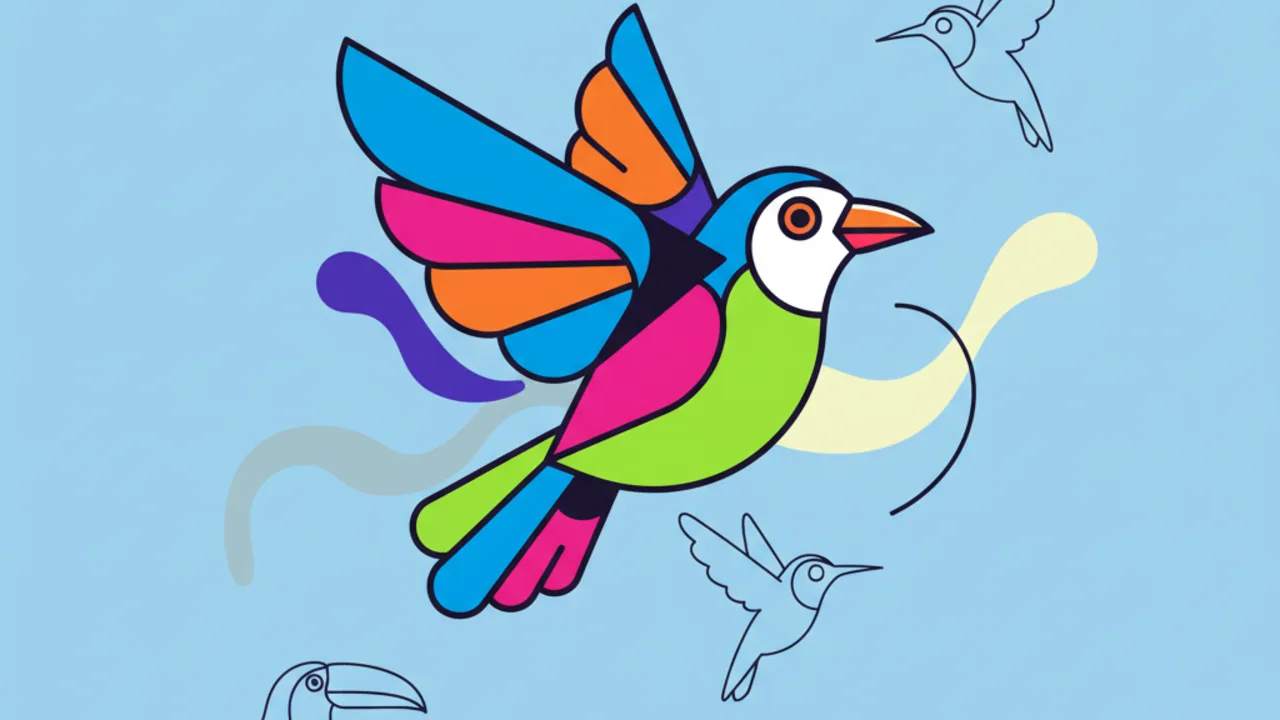
Master how to draw realistic birds with these free outlining techniques. Check out pro line art tips and download free coloring pages at Desenhando e Colorindo. 🎨
Mastering Outlines for Realistic Bird Drawings
Drawing birds requires a keen eye for natural shapes. To get started, both professional and kids' line art focus on breaking down the bird's body into basic geometric shapes before adding the details that bring it to life.
When searching for free coloring pages to print, you'll notice that skeletal structure and feather arrangement are key. Start by drawing a circle for the head and an elongated oval for the body, connecting them with smooth lines that define the neck.
With springtime bringing more life to the gardens, observing real birds helps you understand how light hits their feathers. Use light pencils for your initial sketch, ensuring that the outline can be refined later without leaving permanent marks on the paper.
Pro Tip: When outlining a bird, use short, overlapping strokes to mimic the texture of small feathers, instead of one continuous line that would make the drawing look flat.
Wing Anatomy and Layering Techniques in Line Art
Wings are the most complex part of any realistic bird. To create a coloring page that looks professional, you need to divide the wing into three main feather groups: primaries, secondaries, and coverts.
The secret to a great digital coloring book or physical printout lies in the precision of these lines. Primary feathers are longer and stiffer, while coverts are short and soft. Try varying the pressure of your pencil or digital pen to represent these different textures.
If you're looking for educational coloring activities, focusing on wing anatomy helps kids understand how aerodynamics work in nature. Desenhando e Colorindo offers templates that make this visual learning easier through constant practice.
Detailing Flight Feathers
Flight feathers need sharp, clean outlines. When creating coloring sheets, make sure each feather overlaps its neighbor logically, following the direction of airflow. This adds volume and depth to the final drawing.
Texturing and Hatching in Coloring Pages
Hatching is a fundamental technique for anyone looking to level up their educational drawings. By adding fine, parallel lines in shaded areas, you create a sense of depth without needing complex colors.
When working on cute bird drawings, you can use wider-spaced hatching to keep the look light and airy. For birds of prey, like eagles and hawks, denser and more angular lines convey the strength and stiffness of their feathers.
Take advantage of our free drawing gallery to practice this technique. Heavier weight paper is ideal if you plan to use ink for the final outline, preventing the ink from bleeding through the page.
- Use cross-hatching for deep shadows under the bird's belly.
- Keep lines thin in areas where light hits directly.
- Follow the bird's body curvature with your hatching to reinforce 3D volume.
- Mix dots (stippling) with lines for skin textures on the feet.
How to Draw Expressive Eyes and Detailed Beaks
The bird's eye is the focal point. In coloring for kids, the eye is often just a black dot, but in realistic drawings, it should have sparkle and depth. Leave a small white circle to represent the light reflection.
Beaks vary drastically between species. Hummingbirds have needle-thin beaks, while macaws have robust, curved ones. Your free outline should respect this functional shape, showing nostrils and the keratinous texture.
When downloading printable art, notice how the beak integrates into the face. There isn't a hard line separating the beak from the head; usually, there's a smooth transition of tiny feathers that you can represent with small dotted strokes.
Recommended Tools for Bird Outlines
To get the best results on your coloring pages, choosing the right tools is crucial. While an HB pencil is great for sketching, technical pens (fine liners) are the best for the final outline.
If you prefer coloring online, illustration software allows you to create separate layers for the sketch and final line art, making quick corrections easy. Artificial intelligence can also be used to generate pose references, which you then translate into your own manual outline style.
For those who prefer traditional methods, here are the basics:
- Graded pencils (2B for shadows, 4H for light sketches).
- Disposable pens with 0.1mm to 0.5mm tips.
- High-quality printer paper or dedicated drawing paper.
- Kneaded eraser to avoid damaging the paper fibers.
The Importance of Proportion in Bird Drawing
Many people struggle with bird drawing because they don't pay attention to the proportion between the body and the tail. At Desenhando e Colorindo, our line art templates follow biological patterns to ensure the drawing looks natural.
The tail acts as a rudder. Depending on the species, it can be forked, square, or rounded. When tracing the outline, remember that tail feathers also fan out, which is an excellent opportunity to practice symmetry in your printable coloring pages.
Drawing Realistic Feet and Talons
Bird feet are often overlooked. They have scales and sharp claws. Use cylindrical shapes for the toes and focus on joint details to give your bird drawing an organic and functional look.
Frequently Asked Questions
What is the best paper for printing coloring pages?
Ideally, use paper with a weight above 24lb (90g/m²) to prevent colored pencils or markers from bleeding through, ensuring a better coloring experience.
How can I improve my line art strokes?
Practicing "loose lines" is essential. Try drawing circles and straight lines on a separate sheet every day to gain confidence and hand stability before starting the final outline of your bird.
Can I use these drawings for online coloring?
Yes, you can download the images in digital format and open them in painting apps on tablets or computers to color digitally using brushes that simulate watercolor or oil.
Where can I find rare bird templates to draw?
On the Desenhando e Colorindo website, we have specific sections for exotic birds and local wildlife, ready to download, print, and start practicing your outlining techniques.
Conclusion
Mastering the art of drawing realistic birds is a journey of observation and patience. By using our outlining and texturing tips, you can turn a simple sketch into a detailed work of art. Don't forget to explore our entire library at Desenhando e Colorindo, where you'll find hundreds of free coloring pages to print. Grab your pencils, pick your favorite bird, and start creating today! 🎨✨
Escrito e revisado por Armando Amaro
Fundador do Desenhando e Colorindo. Todo artigo passa por curadoria e revisão humana antes de ser publicado.