Mastering Basic Shapes: Coloring Tips to Improve Motor Skills
26 de agosto de 2026
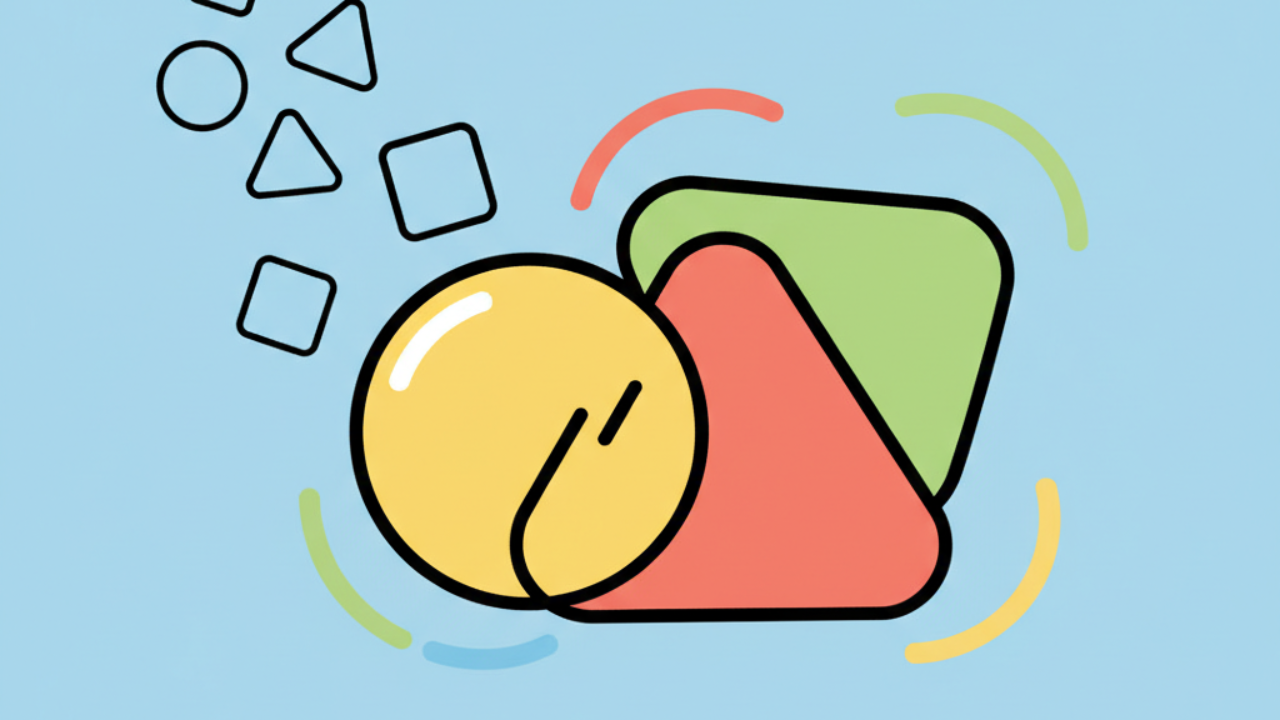
Learn how to color basic shapes like circles and triangles to boost fine motor skills. Download our free geometric shape coloring pages to start practicing today!
The Pedagogical Importance of Coloring Geometric Shapes
Practicing painting coloring pages focused on geometry is the first step toward artistic development. In August, with back-to-school season in full swing, teachers and parents can use these coloring activities to reinforce basic math concepts in a playful, visual way.
By working with circles, squares, and triangles, children begin to understand spatial boundaries. Repeating these shapes in a digital coloring book or printed sheet helps steady their hand, allowing little artists to gain confidence before moving on to more complex and cute drawings.
At Desenhando e Colorindo, we believe the foundation of art lies in simplicity. That's why we offer a wide range of printable art specifically focused on the anatomy of these shapes, ensuring that learning is progressive and extremely fun for all ages.
How to Practice Painting the Perfect Circle
The circle is undoubtedly one of the biggest challenges for beginners. Because it has no straight angles, it requires a fluid wrist movement. Whether coloring online or on paper, the best tip is to start from the edges toward the center, following the arc of the line.
Using coloring pages that contain circles of different sizes helps children adjust their pencil pressure. For small circles, use short movements; for large ones, the movement should come from the elbow, providing a complete and educational kids' line art experience.
Pro Tip: When painting a circle, try rotating the sheet of paper as you progress along the outline. This keeps your arm at a comfortable angle and prevents you from going outside the lines.
Mastering the Square and Corner Precision
Unlike the circle, the square requires precision in 90-degree angles. Working with free printable coloring pages of squares helps develop a perception of symmetry and balance. It is essential to teach children to fill in the corners first.
Many coloring activities are based on the premise that the square is the foundation for drawing houses, buildings, and boxes. By mastering this shape, students are actually learning to structure complex scenes within a coloring book.
- Start by painting the corners with slow movements.
- Fill the center with uniform horizontal or vertical strokes.
- Experiment with different colors on each side to understand depth.
- Use educational drawings that combine squares to form mosaic patterns.
The Role of Triangles in Visual Composition
The triangle introduces the concept of diagonal lines. On our AI coloring pages platform, we've noticed that the triangle is a favorite shape for creating mountains, rooftops, and stylized trees. Knowing how to color the sharp points of a triangle is an excellent fine motor skills exercise.
To get a professional result on your coloring pages, encourage the use of gradients in triangles. Starting with a dark color at the base and lightening toward the top creates an illusion of volume that delights children and stimulates artistic curiosity.
Filling Techniques to Improve Coordination
Fine motor coordination is the ability to use the small muscles in the hands and wrists. By using coloring pages with basic shapes, the brain trains for precision. The secret to a beautiful painting is patience and choosing the right materials.
At Desenhando e Colorindo, we suggest that beginners use crayons for large shapes and colored pencils for kids' line art with smaller details. This creates a tactile repertoire that is fundamental for school and artistic development in childhood.
Practical Exercises with Combined Geometric Shapes
After practicing isolated shapes, the next step in coloring activities is working with overlaps. When a circle crosses a square, new painting areas emerge that challenge a child's spatial logic, making coloring for kids a valuable cognitive exercise.
Check out some exercise suggestions:
- Repetitive Patterns: Paint a sequence of triangles and circles alternating primary colors.
- Character Creation: Turn a circle into a face and a triangle into a hat before coloring.
- Complementary Colors: Use opposite colors in the circle and square to see how they interact visually.
- Textures: Try stippling (dots) inside a square and long strokes inside a circle.
Benefits of Educational Drawings in Child Development
Educational drawings that focus on geometric shapes go far beyond entertainment. They assist in literacy, as many letters of the alphabet are based on these basic shapes (like the 'O' in a circle or the 'A' in a triangle). Providing printable art with this focus is an investment in their academic future.
Furthermore, the act of printing for free these models allows mistakes to be part of the process. If a child goes outside the lines, they can simply try again on a new sheet, which reduces frustration and encourages persistence—an essential trait for any budding artist.
Integrating Technology: AI Coloring Pages
Modernity has brought incredible tools to the art world. Today, at Desenhando e Colorindo, you can use AI-generated drawings to create unique geometric patterns. Imagine asking the AI to create a castle made only of triangles and squares for your child to color!
This interaction between classic paper and pencil and cutting-edge technology transforms the experience of coloring online into something dynamic. The kids' line art generated by AI maintains the purity of basic shapes but adds a touch of magic and exclusivity that captures the attention of little digital natives.
Frequently Asked Questions about Coloring Basic Shapes
What is the best age to start coloring geometric shapes?
Children as young as 2 can start scribbling inside large, simple shapes. By age 4 or 5, they gain the coordination needed to respect the edges of more complex free printable coloring pages.
How do I encourage a child who struggles to stay inside the lines?
The secret is using coloring pages with very thick lines. Desenhando e Colorindo offers specific line art for beginners, where the black border is wider, making it easier for the child to maintain visual and motor control while painting.
Can I use paint on basic shape drawings?
Yes! In fact, finger painting in circles and squares is an excellent sensory activity. We recommend printing our educational drawings on slightly heavier paper if using paint to prevent the sheet from tearing.
Why are basic shapes better than detailed drawings for initial training?
Basic shapes eliminate the distraction of excess detail. This allows the child to focus entirely on filling technique and hand pressure, building a solid foundation for eventually coloring cute drawings and detailed scenes perfectly.
Now that you understand how geometric shapes are essential for artistic evolution, how about getting started? Visit our full gallery at Desenhando e Colorindo, choose your favorite models, and take advantage of free printing for hundreds of options that will turn learning into pure fun. Let your imagination run wild and start coloring today!
Escrito e revisado por Armando Amaro
Fundador do Desenhando e Colorindo. Todo artigo passa por curadoria e revisão humana antes de ser publicado.