Mastering Different Art Styles for Coloring Pages
26 de agosto de 2026
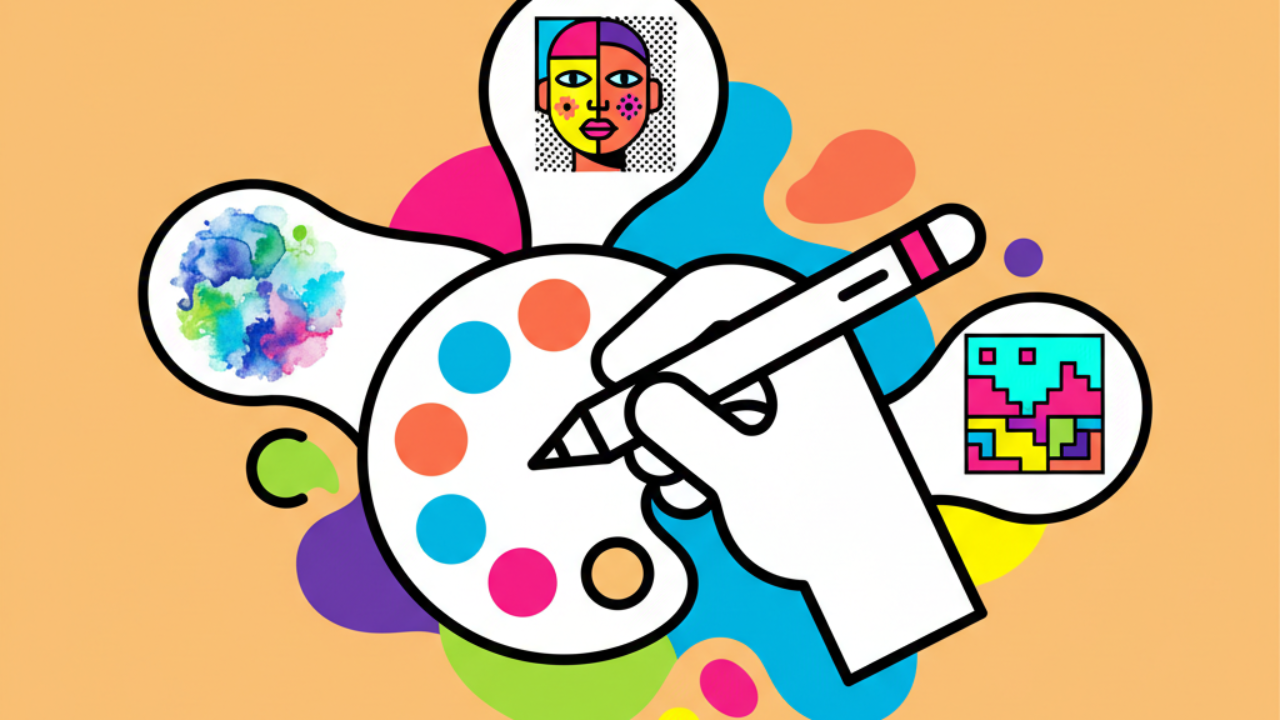
Learn how to bring your coloring pages to life with unique artistic styles. Explore techniques to turn simple printable sheets into true masterpieces.
Exploring the Watercolor Style in Coloring Pages
Coloring free printable pages doesn't have to be limited to just filling in spaces with solid colors. The watercolor style is one of the most beautiful ways to bring your digital coloring book to life.
To achieve this effect on standard paper, you can use watercolor pencils. The technique involves applying the pigment lightly and then using a brush with very little water to blur the edges, creating soft, organic transitions.
When working with educational coloring pages or printable art, watercolor allows kids to understand how mixing primary colors creates secondary ones, turning coloring into a fun visual science experiment this August.
Remember not to soak the paper. If you printed your design on standard A4 paper, the trick is to use minimal moisture to prevent the sheet from warping, keeping your kids' line art intact.
Pro tip: Test your color mixing on a separate scrap of paper before applying it to the final drawing to ensure the shadow tone is exactly what you want.
Required Materials for the Watercolor Style
- High-quality watercolor pencils.
- Soft-bristle brushes (various sizes).
- A small cup of clean water.
- Paper towels to remove excess moisture from the brush.
The Charm of Pointillism in Cute Drawings
Pointillism is a fascinating artistic technique that uses small dots of color to create images and textures. By applying this technique to our cute drawings, you create a visual effect of depth and shadow without using continuous lines.
To start, choose fine-tip markers. Instead of coloring the traditional way, fill in the areas with dots. The closer the dots are, the darker the color will be. The further apart they are, the more light the drawing will have.
This technique is excellent for developing fine motor skills and patience. It is one of the most recommended coloring activities for those who want a sophisticated and unique final result, transforming a simple page into a gallery piece.
You can mix colors in pointillism by placing blue and yellow dots very close together. From a distance, the human eye will perceive green—a classic Impressionist optical illusion adapted for your kids' and adults' coloring time.
Hatching Style: Creating Textures with Lines
Hatching consists of sets of parallel or crossed lines that create the effect of light and shadow. When downloading our free coloring pages to print, you can use this technique to give your work a more classic and rustic feel.
There are different types of hatching: simple (lines in a single direction), cross-hatching (two or more overlapping directions), and contour hatching (which follows the shape of the object). Using hatching in line art adds a professional dimension to your work.
Try using hatching on drawings of landscapes or animals. The lines can simulate the texture of fur, scales, or the grooves of a tree trunk, elevating your online coloring or manual art.
Tips for Perfect Hatching
- Keep a steady wrist and constant pressure on the pencil or pen.
- Use different graphite grades (like 2B and 4B) to vary the intensity of the shadows.
- Start from the darkest areas and move toward the lighter ones, decreasing the density of the lines.
Pop Art: Vibrant Colors and Bold Contrasts
The Pop Art style is perfect for those who love neon colors and strong contrasts. Inspired by great artists, this style focuses on the use of saturated primary colors and thick, well-defined black outlines.
When choosing AI-generated drawings at Desenhando e Colorindo, you can apply colors like hot pink, lemon yellow, and turquoise blue in flat layers without gradients. The goal here is immediate visual impact.
You can also add extra graphic elements, such as small circles (Ben-Day dots) in the background to simulate the aesthetic of old comic books. It's a fun way to modernize any coloring page.
Pro tip: Use a thick-tipped black marker to reinforce the external outlines of the drawing after you finish painting. This will make the image "pop" off the page.
Realism with Graded Colored Pencils
For those seeking a bigger challenge, realism is the way to go. The secret here is "layering." Instead of pressing the pencil hard against the paper, you should apply several light layers to build the color gradually.
Realism requires careful observation of light. Identify where the light source is coming from in your coloring page and leave those areas almost white, while the opposite areas should receive darker, deeper tones.
Using a blending stump or even a cotton ball can help smooth out color transitions, eliminating pencil stroke marks and creating smooth, realistic skin or surfaces in your printable art.
Minimalist Style: Less is More
Sometimes, beauty lies in simplicity. In the minimalist style, you choose just one or two colors to highlight specific parts of the drawing, leaving the rest white or in very soft neutral colors.
This approach is excellent for creating decorative pieces for a bedroom. Choose a delicate kids' line art and paint only one detail—like a character's bow or a single flower in a garden. The visual focus becomes immediate and elegant.
Minimalism helps focus on the structure of the stroke, highlighting the quality of the lines we offer at Desenhando e Colorindo. It is a relaxing technique that doesn't require rushing and values negative space.
Frequently Asked Questions
What is the best type of paper for printing drawings?
For standard colored pencils, 24lb or 32lb (90g to 120g) paper is excellent. If you plan to use paints or watercolors, we recommend cardstock or paper above 65lb (180g) to prevent the sheet from tearing or warping with moisture.
Can I use markers for all styles?
Markers are great for Pop Art and Pointillism. However, they can bleed through thinner paper. Always place a scrap sheet under your coloring page to protect your table or other sheets in your pad.
How do I make shadows without using black?
A professional tip is to use analogous or complementary colors for shading. For example, on a red object, use a dark blue or purple tone for shadows. This makes the drawing richer and more vibrant than just using black.
How do I save my drawings from the Desenhando e Colorindo website?
Simply browse our categories, choose your favorite image, and click the print or download button. Our art is ready in high resolution to ensure every line comes out perfect on your home printer.
Regardless of the style you choose, the most important thing is to have fun and let your creativity flow. Each coloring page is a new world of possibilities waiting for your personal touch. Now that you know these techniques, how about putting them into practice? Visit our gallery of free coloring pages to print at Desenhando e Colorindo, pick your favorites, and start your artistic journey today!
Escrito e revisado por Armando Amaro
Fundador do Desenhando e Colorindo. Todo artigo passa por curadoria e revisão humana antes de ser publicado.