How to Break Down Detailed Line Art into Simple Shapes
27 de agosto de 2026
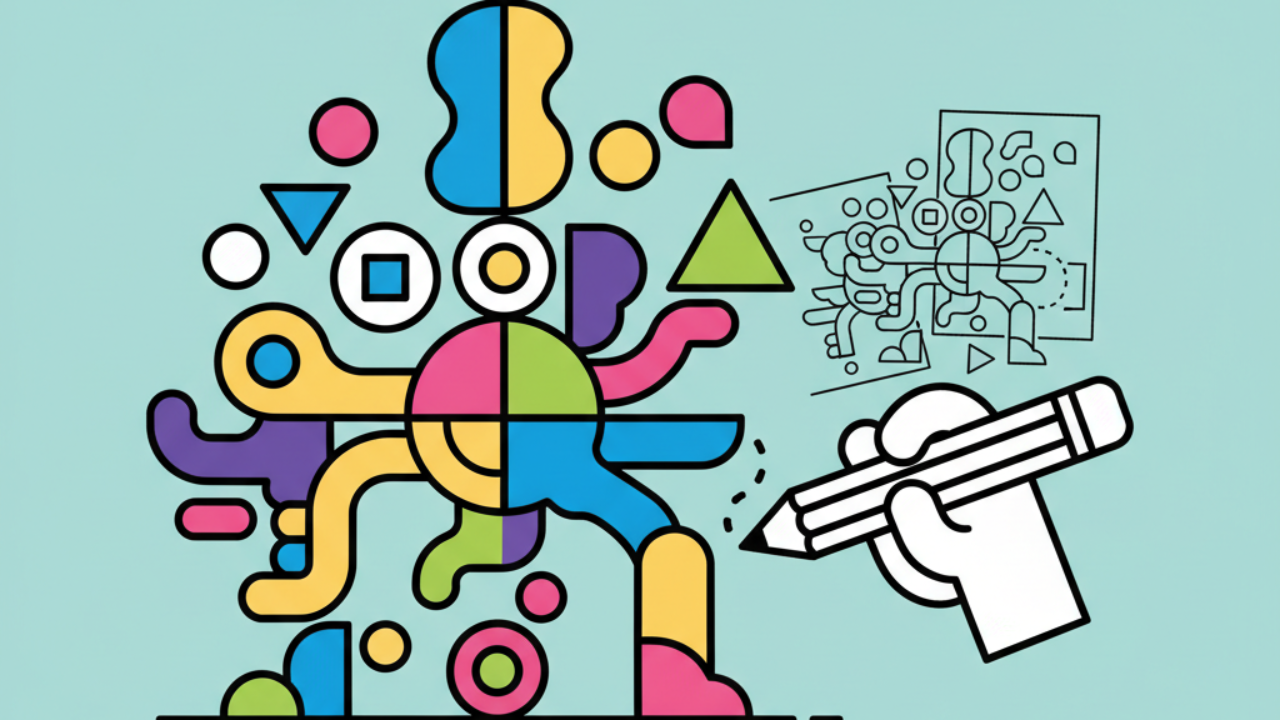
Learn how to color intricate line art by breaking complex drawings into simple shapes. Level up your skills with our free printable coloring pages! 🎨
The Challenge of Detailed Line Art for Coloring
Coloring intricate designs can be an extremely relaxing activity, but we often come across coloring pages that feel a bit too overwhelming due to the sheer amount of detail. At Desenhando e Colorindo, we believe that anyone can master the art of bringing images to life, regardless of the difficulty level.
The key to not feeling overwhelmed when opening a new digital coloring book is segmentation. When we look at detailed line art as a whole, the brain tends to focus on the complexity. However, by applying the technique of breaking it down into simple shapes, the process becomes fluid and much more fun for kids and adults alike.
In this comprehensive guide, we will explore how you can transform any free printable coloring page into a manageable and visually stunning project using only basic geometric perception.
Why Break Down Drawings into Geometric Shapes?
Every piece of line art for kids or adults is composed of fundamental structures. When looking at a drawing of a medieval castle or an enchanted forest, you'll notice they are made of circles, squares, triangles, and rectangles in disguise. Identifying these shapes is the first step to a successful painting.
This approach helps define the color palette before you even touch a pencil to paper. If you identify that a part of the drawing is made of small circles (like flower petals or dragon scales), you can decide whether to color each one individually or create a gradient that encompasses the entire set of shapes.
Pro Tip: Before you start coloring, use a very light colored pencil to circle areas with similar shapes. This helps you visualize the map of your coloring page.
The Psychology of Shapes in the Art of Coloring
Circles usually represent organic, soft elements, while squares and rectangles lean toward solid, man-made structures. By separating these areas, you can decide where to apply textures and where to keep colors flat, optimizing your time during coloring activities.
Segmentation Techniques for Complex Drawings
To master the art of coloring AI-generated or hand-drawn illustrations with lots of detail, follow these structured steps. Segmentation allows you to focus on one small victory at a time, keeping motivation high throughout the creative process.
- Identify the Focal Point: Find the largest or most central shape in the drawing. It could be a character's face or a treetop.
- Grouping by Similarity: Mentally group all shapes that repeat. In mandala drawings, for example, identify patterns that form concentric rings.
- Layer Hierarchy: Determine what is in front (foreground) and what is behind (background) based on overlapping shapes.
- Edge Definition: Use darker colors on the edges of geometric shapes to create depth and visual separation between elements.
When using our coloring pages, always try to start with the largest and simplest shapes. This creates a solid foundation so that smaller details can be filled in later without fear of ruining the color harmony.
How to Apply the Technique to Educational Drawings
For teachers and parents, teaching children to break down educational drawings into simple shapes is an excellent way to introduce basic concepts of geometry and visual arts. When downloading a cute drawing at Desenhando e Colorindo, ask the child to identify where the triangles or circles are before starting to paint.
Benefits for Child Development
This practice stimulates fine motor skills and spatial perception. When a child understands that a robot's arm is a cylinder or that a house is a set of squares and triangles, they gain more confidence to perform online coloring or paper coloring, reducing frustration with small spaces.
Tools and Materials for Coloring Line Art
The choice of materials directly influences how you handle shapes. For very detailed printable art, some items are essential to ensure the division of shapes is respected and the final result is clean and professional.
- Fine-Tip Colored Pencils: Ideal for filling in small geometric shapes and sharp corners.
- Gel Pens or Markers: Excellent for reinforcing outlines (line art) after painting, giving more emphasis to separate shapes.
- Precision Eraser: Essential for cleaning up areas where color has bled outside the desired shape.
- High-Quality Sharpener: Keeping a sharp point is the secret to working on free printable drawings with high detail density.
The Role of Technology: AI-Generated Drawings
At Desenhando e Colorindo, we use cutting-edge technology to offer AI-generated drawings that are optimized for colorists. AI allows us to create line art with very well-defined geometric structures, making the visual separation process easier for the user.
These exclusive images are generated with the experience of those who enjoy challenges but value visual organization in mind. You will find everything from futuristic landscapes to fractal patterns that are perfect for testing the shape-division technique.
Exploring Creativity with AI
Unlike traditional images, AI creations can present abstract shapes that invite new experiments. You can decide that a set of abstract triangles represents water, or that floating circles are energy spheres, giving total freedom to your imagination.
Tips for Coloring Transition Areas
One of the biggest challenges in dividing drawings into simple shapes is dealing with where two shapes meet. To prevent the drawing from looking "cut out," you can use shading techniques. If a circle touches a square, slightly darken the edge of the circle that is under the shadow cast by the square.
This adds three-dimensionality to your digital coloring book and makes the simple shape technique look like a complex and professional work of art.
Frequently Asked Questions
How do I identify shapes in very abstract drawings?
Try squinting your eyes while looking at the line art. This helps ignore tiny details and see the main masses of light and shadow, which usually correspond to the basic geometric shapes structuring the image.
What are the best colors for beginners to use with this technique?
We recommend starting with analogous colors (those close to each other on the color wheel). Choose a main shape to be the dominant color and use variations of that color in adjacent shapes to create a smooth, eye-pleasing transition.
Can I use this technique for online coloring?
Yes! The fill tools (paint bucket) in online coloring apps work perfectly with closed shapes. If your line art is well-defined, you can fill each geometric shape with one click, making the job much easier.
Where can I find detailed drawings to practice?
You can find thousands of options right here at Desenhando e Colorindo. Browse our line art categories and free printable drawings to choose the detail level that best fits your leisure time.
Conclusion
Mastering the technique of dividing complex drawings into simple shapes is the most effective way to evolve your artistic skills while enjoying a relaxing moment. Whether using traditional colored pencils or exploring the digital world, the secret lies in observation and patience. Now that you know these secrets, how about putting them into practice? Visit our gallery, choose your favorite free printable coloring pages, and start transforming simple shapes into masterpieces today!
Escrito e revisado por Armando Amaro
Fundador do Desenhando e Colorindo. Todo artigo passa por curadoria e revisão humana antes de ser publicado.